The New Photo Experience Starts Here
Phota Studio and Phota API bring personalized photo editing and generation to developers, photographers, and creators.
Today, we're introducing Phota Studio and Phota API, a personalized photo generation and editing model with the capabilities of flagship image models, but one that knows you. With it, developers can build new photo experiences, while photographers and creators can explore a new kind of AI-native editing and generation.
Personalization Makes GenAI Relevant
A lot of image models claim character consistency. But once you put yourself into the workflow, that promise tends to break. The images may look similar to you, but they're not really you. With Phota, for the first time, you can generate, edit, and enhance photos while keeping your identity intact, every time.
Our focus is photography, where real people and real moments matter most. We want to make compelling photographs accessible to everyone: helping you recreate moments you wish you had captured, from a different angle, in better light, with a more natural posture, or simply with everyone looking at the camera and smiling naturally. And beyond that, to create new photos of real people that still feel photographic, whether that means a studio portrait, a different setting, or a moment you never had the chance to capture.
We're not building a generic foundation model. We build personal models about you, and about the people and pets around you. At the center are profiles, built from your personal album that learn the details of your appearance that make you recognizable as yourself: how you smile, your eye color, and how your face looks from different angles. Your personal model is private and only used by you.
Faithful Editing
At one end are the edits we need very often: small, practical changes that keep the original moment intact.
Faithful editing is where photography begins: subtle corrections that improve a photo without changing what was there. Blur, noise, low light, missed focus, or an awkward expression can all get in the way of an otherwise meaningful image. Some of these are general recovery tasks, but personalization matters whenever the photo involves people, because even small edits need to preserve what makes someone look like themselves. The goal is to recover the photo more clearly and beautifully, without losing the original moment.
 Before
 After
AfterIn Phota Studio: Actions → Fix it
Moment Reimagining
The next layer is more structural. The photo is still rooted in real people and real memories, but the composition itself begins to change.
These edits reshape a moment: adding someone in, removing people, regrouping a family, merging multiple shots into one, or turning partial inputs into a complete photo. Doing that often requires re-posing a person, placing them into a new environment, handling occlusion, and harmonizing differences in lighting, perspective, and composition. Personalization matters because the model has to preserve who someone is even as the scene changes around them. The result has to work as a coherent photograph of real people.
 Before
 After
After“Create a solo portrait of the bride”
In Phota Studio: Editor → write a prompt
Creative Generation
At the imaginative end, the goal is no longer to recover a missed photo, but to create one that never existed before.
This is the most creative category: generate a headshot, try a new style, make a card, or turn a person into a pencil drawing or cartoon. Here the freedom is much larger, and the need for personalization becomes the foundation that makes creativity meaningful. The image may change dramatically, but it should still carry the identity and recognizability of the person at its center.
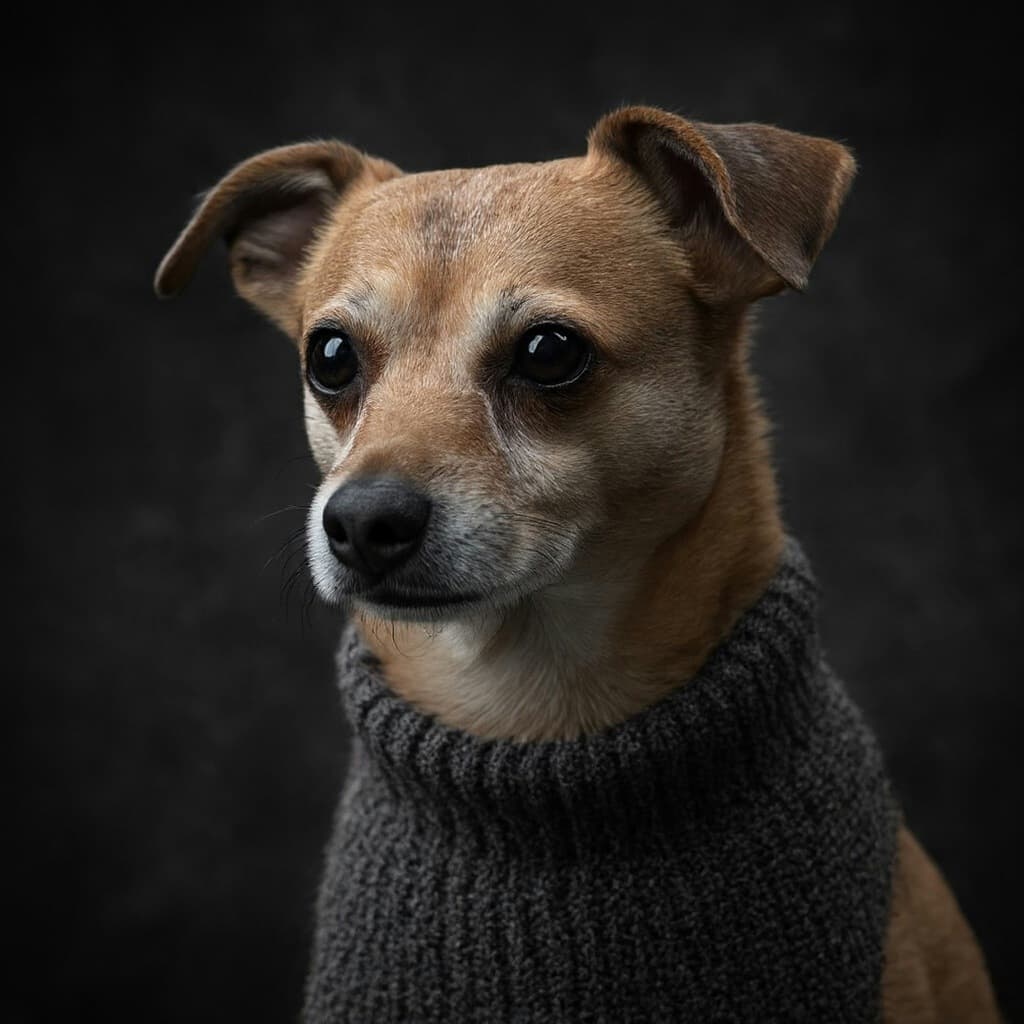
“Professional corporate headshot of @person, chest up. Soft warm-gray seamless with very subtle vignette (not pure white), clean and modern. Color: neutral, editorial portrait style.”
In Phota Studio: Booth → write a prompt
Limitations
Your personalized model learns from the data you provide, so identity fidelity depends on the quality and coverage of that data. For example, if your album doesn't include side-profile photos, the model may struggle to accurately render your face from those angles.
The system can also have difficulty determining who is in a photo without sufficient context, especially in challenging cases like occlusions or blurry faces. In these situations, it may select the wrong profile or none at all. When that happens, you can guide it by explicitly assigning people to profiles in the UI.
Finally, the model can be conservative when edits risk altering identity. For example, requests like changing eye color may not always be applied, as the system prioritizes preserving who you are.
Safety
Because Phota works with photos of real people, safety matters even more. We apply NSFW filtering across the product, and we’re actively working on ways to mark generated and edited images for authenticity. We’re aware of the responsibility that comes with building in this space, and we’ll continue to be thoughtful and careful about how these tools are developed and deployed.
The New Photo Experience Starts Here
We’re excited to put Phota Studio and Phota API into the hands of developers, photographers, and creators, and to keep building toward a future where photography feels more personal, more creative, and more accessible to everyone.